Funky Yard: A Whimsical Display Font with Retro Charm
If you're looking to add a dash of personality and playfulness to your designs, Funky Yard might just be the perfect choice. This quirky display font blends retro aesthetics with modern flair, making it a versatile tool for creative professionals who want to stand out without shouting. Whether you're designing a logo, crafting social media content, or working on packaging for a new product line, Funky Yard brings charm, character, and a unique visual punch.
What Makes Funky Yard Unique?
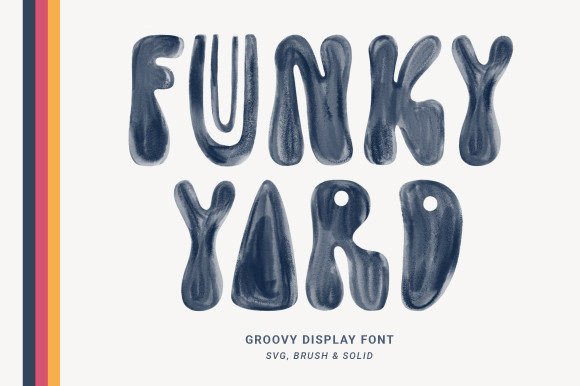
Funky Yard is not your typical typeface. It’s a premium display font that leans into whimsy and eccentricity. The letters have exaggerated curves, playful serifs, and subtle irregularities that give them a handcrafted feel. These features make it ideal for use in attention-grabbing headlines, signage, and other high-impact design elements where legibility isn't the primary concern but style is.
The font's personality is best described as retro-futuristic—think 1960s psychedelic posters with a clean, contemporary edge. Its bold presence invites creativity while maintaining enough structure to remain usable in certain editorial contexts. Though it's not suited for body text, when used appropriately, it can elevate the overall look and feel of your project.
Visual Characteristics That Define Funky Yard
- Playful Serifs: Each character has distinctive serifs that add movement and rhythm to the text.
- Uneven Baselines: The slight variation in letter height and baseline alignment gives the font an organic, almost handwritten quality.
- High Contrast: Thick strokes and thin lines create visual interest and depth.
- Color-Friendly Design: The open shapes and bold forms work well with gradients and color overlays, especially in digital projects.
This mix of characteristics makes Funky Yard more than just another decorative font—it's a full-fledged design asset that can help shape the tone and mood of your visuals.
Where Funky Yard Shines in Real Projects
Display fonts like Funky Yard are often misunderstood as being too "out there" for professional settings. But when applied thoughtfully, they can become powerful tools for storytelling and branding. Here are some of the most effective uses for this font:
Logo Design and Branding
Brands that want to communicate fun, innovation, or nostalgia can benefit greatly from Funky Yard. For example, a boutique selling vintage-inspired clothing or a craft beer label aiming for a laid-back vibe could use this font to instantly convey their identity. Just remember to pair it with a more neutral secondary font for supporting text to maintain balance and readability.
Editorial and Packaging Design
In magazine covers, book titles, or product packaging, Funky Yard adds a sense of excitement and originality. Imagine using it for a travel blog's cover story about retro road trips or a music festival poster inspired by the 70s. The font helps set the scene before a single word is even read.
Web and Social Media Graphics
For websites and social platforms, Funky Yard works beautifully in hero sections, call-to-action buttons, and banner headlines. It's particularly effective in web design for lifestyle brands, entertainment sites, or personal blogs that aim to express individuality. On Instagram, Twitter, or Facebook, it can be the difference between a post blending in and one that demands attention.
Personal and Commercial Use
Crafters and hobbyists love using Funky Yard in greeting cards, posters, and handmade items. Entrepreneurs and small business owners may find it useful for signage, branded merchandise, or event invitations. As a commercial font, it's licensed for both personal and business applications, which is always a big plus when investing in design assets.
How to Make Funky Yard Work for Your Project
While Funky Yard is undeniably eye-catching, its success in a design depends on how well it fits the context. Here are a few tips to help you evaluate whether it's the right fit:
- Understand the Purpose: Is this a headline, a title, or part of a larger brand system? Funky Yard excels in short bursts of text rather than long paragraphs.
- Test Font Pairings: Try pairing it with a sans serif or minimalist script font to complement its energy. A good combination keeps the design balanced and readable.
- Review Included Styles: Check if the font package includes weights or alternate characters. Some versions offer multiple styles, which can enhance your creative options.
- Consider Readability: Avoid using it in situations where clarity is critical. Reserve it for areas where style enhances message delivery, not hinders it.
- Evaluate Licensing: Ensure the font license allows for the intended use, whether it's print, web, or commercial. This avoids legal pitfalls later on.
A practical approach to integrating Funky Yard starts with knowing when and where to deploy it. Let's say you're launching a new product called “GroovyBrew” for artisanal teas. Using Funky Yard in the logo alongside a clean sans serif for taglines and descriptions creates a strong contrast that highlights the brand’s playful yet trustworthy nature.
Designing with Elegance and Edge
One of the biggest challenges in typography is finding the sweet spot between uniqueness and usability. Funky Yard walks this tightrope well, offering enough stylization to spark emotion while keeping its roots grounded in modern typography principles.
When building a brand identity, the font you choose says a lot about what your brand stands for. Funky Yard conveys a sense of fun and freedom—perfect for lifestyle, entertainment, or creative industries. However, it also needs to align with the rest of your visual language. If your brand feels too serious or corporate, this font might clash instead of complement.
To maximize impact, consider how it plays into visual hierarchy. Because it commands attention, it’s excellent for headlines, but less so for subheadings or body copy. Use it sparingly and strategically to guide the viewer’s eye toward key messages.
Real-World Applications and Creative Tips
Here are a few real-world examples of how designers have used Funky Yard effectively:
- Music Festival Poster: The main title was rendered in Funky Yard with a gradient overlay, while band names and dates were in a simple sans serif. This created a vibrant focal point while ensuring essential details remained clear.
- Restaurant Logo: A retro diner named “The Groove Shack” used Funky Yard for the name and paired it with a classic serif for the tagline. The result felt nostalgic yet fresh.
- Instagram Campaign: A fashion influencer used Funky Yard in a series of animated posts promoting a capsule collection inspired by 80s pop culture. The font helped establish the theme immediately.
Another tip is to experiment with spacing and size. Funky Yard looks great at large sizes, but scaling it down too much can reduce its effectiveness. Also, don’t shy away from adding texture or background layers behind the text to enhance its retro vibe.
Final Thoughts on Choosing Funky Yard
Fonts are more than just letters—they’re the heartbeat of your design. When choosing a typeface like Funky Yard, it’s important to ask yourself what kind of message you want to send. Does your project need something bold and expressive? Does it lean into a retro or indie aesthetic? If so, Funky Yard could be a natural fit.
Remember, the goal isn’t to use the flashiest font available but to select one that supports your message and resonates with your audience. By understanding its strengths and limitations, you can harness the full potential of this creative font and use it to build stronger, more engaging design assets.
So go ahead—let Funky Yard bring some groove into your next project. Just make sure it's placed where it can shine, and you’ll be well on your way to creating something truly memorable.